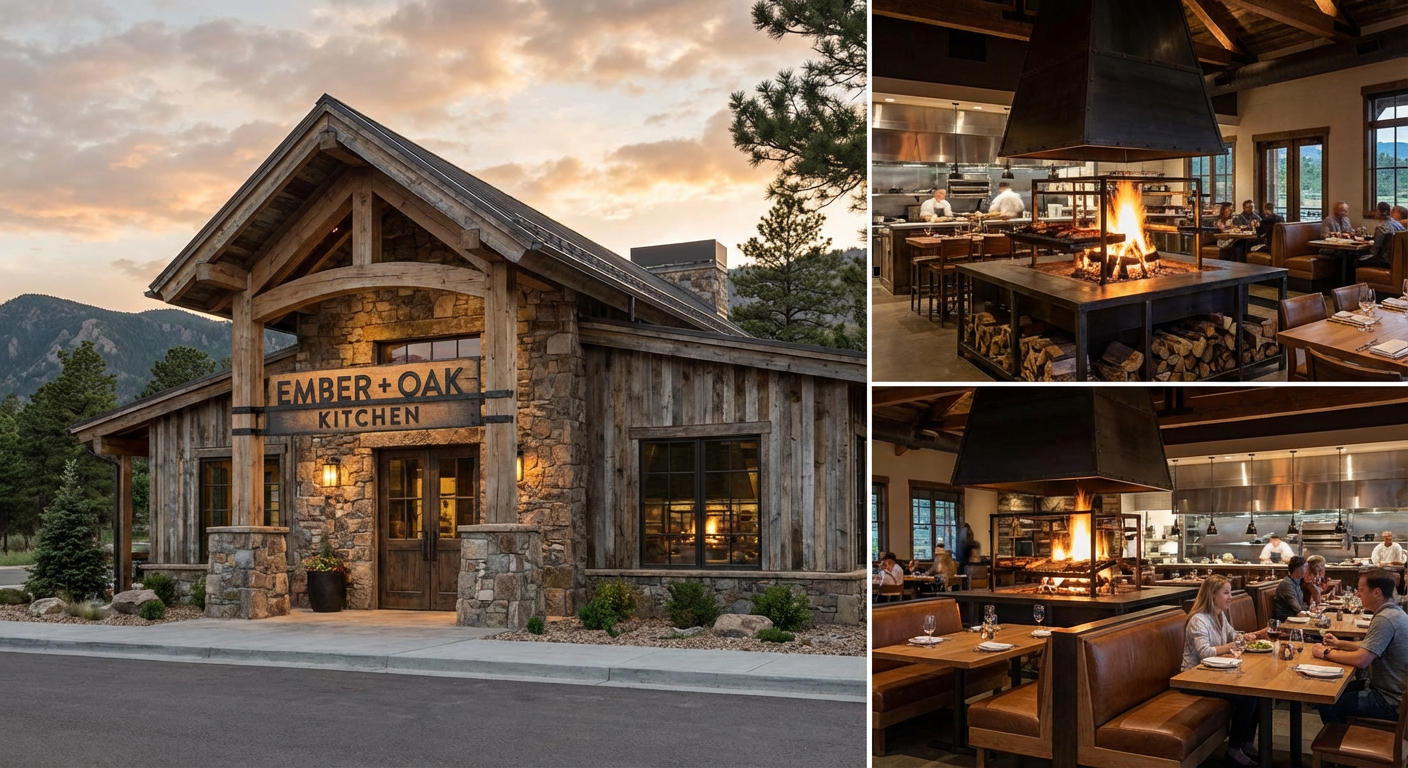
Restaurant Chain Analysis
WAITRONS Case Study
Ember + Oak Kitchen – Regional Wood-Fired Bistro Chain
Small regional wood-fired American bistro chain with strong local loyalty, tight margins, and a growing mix of dine-in and takeout revenue.
Company Profile
Ember + Oak Kitchen is a small regional wood-fired American bistro chain with strong local loyalty, tight margins, and a growing mix of dine-in and takeout revenue.
Intake Data
- Cuisine: Wood-fired American + craft cocktails
- Locations: 6
- Region: Colorado Front Range
- Customer profile: Young professionals, suburban families, tourists
- Operational model: Hybrid dine-in + strong takeout
- Technology: Toast POS, DoorDash/Uber Eats integrations
- Supply chain: Local produce and specialty meats
- Labor challenges: High turnover; rising wage costs
- Financial state: Good revenue, tight margins
- Brand strengths: High ratings, locally sourced ingredients, award-winning desserts
WAITRONS Diagnostic
The diagnostic exposes the operational leaks, margin pressure, and growth bottlenecks behind a popular but stretched concept that wants to scale without losing its identity.
W
Weaknesses
- Labor turnover causing inconsistent service.
- Food cost volatility due to specialty sourcing.
- Limited seating capacity at peak hours.
- Weak brand recognition outside core region.
A
Advantages
- Strong local following.
- Distinctive wood-fired menu.
- High ratings on Yelp, Google, and TripAdvisor.
- Successful specialty cocktail program.
I
Issues
- Kitchen bottlenecks slowing throughput.
- Inconsistent portion control causing margin drift.
- Two underperforming locations.
- Lack of standardized training across sites.
T
Threats
- Rising labor and ingredient costs.
- New independent restaurants in the same niche.
- Delivery apps eroding margins.
- Economic slowdowns hitting discretionary spending.
R
Resources
- Strong executive chef and clear culinary identity.
- Proven floor managers at top four locations.
- Solid vendor relationships.
- Loyal customer base.
O
Opportunities
- Meal kits or branded sauces.
- Catering expansion.
- Sell-through of cocktails-to-go.
- Opening a central commissary to improve margin consistency.
N
Needs
- Workforce stabilization strategy.
- Updated training programs.
- Cost-control measures (portion tools, yield tracking).
- Better marketing and local brand building.
S
Strengths
- Consistent food quality.
- Strong hospitality culture.
- Award-winning menu items.
- High repeat business.
3-Year Strategic Plan: Operational Consistency, Margin Recovery & Market Growth
The plan focuses first on stabilizing labor and operations, then on adding margin-friendly revenue streams, and finally on scaling the concept in a disciplined way.
Year 1 — Fix Labor, Standardize Operations, Improve Margins
- Strategic priorities
- Reduce turnover and improve service consistency.
- Control food costs.
- Fix underperforming locations.
- Key actions
- Launch structured onboarding and cross-training program.
- Introduce portion control tools and menu engineering.
- Conduct deep-dive location audits and fix layout and throughput issues.
- Build weekly P&L coaching for GMs.
- Negotiate vendor contracts for volume pricing.
- KPIs
- Labor turnover ↓ 30%.
- Food cost ↓ 2–3%.
- Underperforming store margin ↑ 5 points.
- Table turn time ↓ 10%.
Year 2 — Brand Growth, Menu Innovation, New Revenue Streams
- Strategic priorities
- Strengthen the brand and increase same-store sales.
- Add new revenue channels with higher margins.
- Improve digital customer engagement.
- Key actions
- Standardize menu across all locations with signature items.
- Launch Ember + Oak catering and events program.
- Sell branded sauces, cocktail mixes, and desserts in retail-ready formats.
- Roll out loyalty app with rewards and push marketing.
- Partner with local hotels, breweries, and tourism boards.
- KPIs
- Same-store sales ↑ 8–12%.
- Catering revenue reaches 10–15% of total.
- Loyalty enrollment hits 25,000+ users.
- Retail CPG trial in 15–20 local stores.
Year 3 — Expansion, Brand Packaging & Scalable Operations
- Strategic priorities
- Open 1–2 new locations in high-growth suburbs.
- Build a commissary kitchen to control consistency.
- Package the brand for franchising or regional scaling.
- Key actions
- Identify expansion sites based on demographic heat-mapping.
- Launch commissary for sauces, desserts, and prep items.
- Create franchise or expansion playbook (layouts, menu, staffing).
- Refresh brand identity and visual standards.
- Pilot limited franchising in one or two markets.
- KPIs
- Revenue ↑ 20–25% from expansion.
- Food cost variance ↓ 50% due to commissary.
- Brand recognition ↑ through regional marketing.
- Two franchise-ready operational playbooks completed.